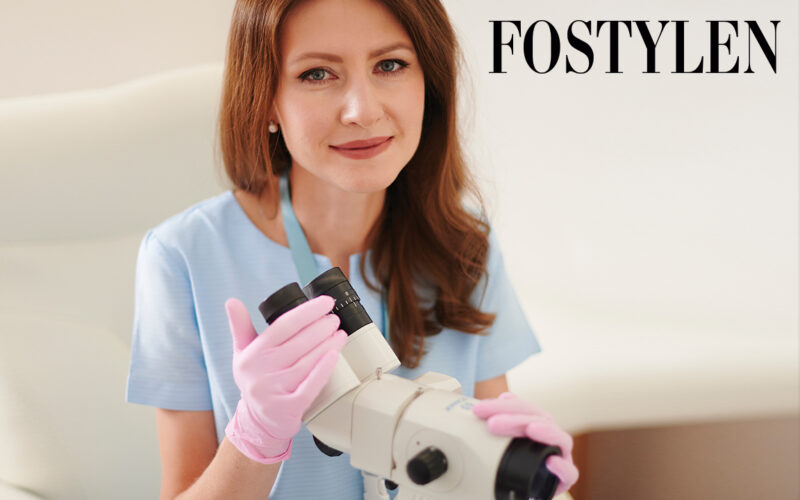
Kyiv, Dubai, Paris, Milan — for Dr. Lika, borders no longer exist. She works at the intersection where form meets meaning, and aesthetics merges with medicine. At a time when the world is growing weary of “cookie-cutter faces,” she speaks about individuality, natural beauty, and regeneration. About why collagen matters more than fillers, rejuvenation matters more than masking, and self-confidence is more valuable than any perfect profile.

I operate within a clearly defined system of high standards, regardless of country or market. It doesn’t matter whether you are in Europe, the Middle East, or Dubai — which, without a doubt, is one of the most highly standardized markets in the world in terms of service, cosmetology, and medicine.
That said, I can confidently say that Ukrainian women are among the most demanding in the world — and this is no exaggeration. It’s not just about aesthetics, but about expectations of quality, professionalism, and results. Today, Ukraine demonstrates an exceptionally high level of development in medicine, cosmetology, and especially dentistry. In this field, we undeniably set the tone.
And it is precisely this level that we now bring to the international market. Because the canons of beauty, facial harmony, and service standards are universal. Yet Ukrainian women set a benchmark of expectations that is hard to match. In their own way, they have become trendsetters in standards of aesthetic budgeting, harmony, and self-care culture.
The era of aesthetic education is undergoing a radical transformation. In the past, learning was more generalized — doctors were introduced to existing technologies, brands, and basic protocols in a broad, theoretical way. Today, the profession has moved to a fundamentally different level.
Now every physician develops their own unique methodologies, and training is built around these authorial systems. This is no longer surface-level education — it is precise, deep specialization that requires serious investment, both financial and intellectual. My own advanced training takes place exclusively at international congresses in Paris, Monaco, Milan, and on global platforms such as AOA.
This year alone, more than thirteen major international congresses dedicated to aesthetic medicine and plastic surgery took place. Every time I return home, I bring back new technologies and integrate them into my own authorial methods. And it is through these methods that I then train my team and colleagues. For me, it is essential not just to follow global trends — but to create my own solutions that meet the highest international standards.

Today, we live in the era of collagen-stimulating medicine — and this represents a completely new approach to aesthetics. We no longer “mask” the problem; we work with its root cause. At the center of everything is inner health. That’s why before any aesthetic procedure, I always prescribe comprehensive diagnostics: a full panel of tests, deficiency analysis, and a thorough assessment of the body’s condition. Only after that do we move to beautification.
If the past was the era of fillers, excessive volumization, and artificial shapes — with heavy, overloaded faces that visually added age — today everything is the opposite. Collagen stimulation is about turning back time. We do not change facial features; we preserve their natural integrity while activating the body’s ability to regenerate itself. We do not “rebuild” a person — we rejuvenate them.
In my practice, I focus on regenerative and collagen-stimulating procedures — particularly advanced biostimulation protocols that activate fibroblasts, trigger dermal renewal, and deliver a visible anti-aging effect that can set the clock back several years.
Innovative body biotechnologies also play a crucial role — they have literally transformed our understanding of what the human body is capable of. Patients who struggled for years to change their proportions or lose weight now achieve results more easily and without aggressive intervention.
Another key component is cellular energy support — it provides the body with strength, vitality, and works on a deep anti-aging level. It enhances internal recovery processes, boosts cellular metabolism, and truly targets the core mechanisms of aging.
We don’t simply work with aesthetics — we work with healing and true rejuvenation, while preserving a patient’s natural, authentic appearance. At the same time, it’s important to understand that collagen is not “instant magic.” Its formation takes time. On average, the desired result develops over a period of two months to six months — this is how long full natural regeneration takes.
However, modern medicine allows us to combine deep biological work with an immediate aesthetic effect. There are products that both stimulate collagen production and provide visible results instantly — literally “on the needle.” These include Radiesse and hybrid products such as Lanluma, which work in two directions at once.
We can immediately sculpt the cheekbones, accent the jawline, and bring freshness and definition to the face — while also achieving a prolonged effect. Over time, these products activate the body’s own collagen production, and the patient gradually regains youthful firmness, healthy tone, and natural beauty — without altering features, without artificiality, purely through the body’s own resources.

Very often, patients come to me with objectively beautiful faces and bodies, yet with deep inner insecurity and anxiety over things that are completely invisible to others. These may be barely noticeable wrinkles that no one else would ever see — but for the woman herself, they become a personal tragedy. This is especially common among young women when the very first signs of aging begin to appear.
And in that moment, the most important thing is not to amplify the anxiety, but rather to explain that this is a natural process — that it is normal. Yes, we can and will work with these changes, but without cultivating fear or complexes. Aging is part of life, and wrinkles will appear for everyone.
The doctor’s task is not to frighten a patient with their first wrinkle at 25, but to teach them to treat themselves with care and awareness. Because if fear of natural change is formed early on, then at 50 a person will live with the same insecurities — just on a much larger scale. Aesthetic medicine must begin with self-love, not panic.
All women, regardless of culture or country, want to look young, beautiful, and healthy. At the same time, aesthetic trends truly differ around the world. For example, Korea and China have their own beauty canons — different facial proportions, different shapes, different visual accents. Very often, what is considered attractive there may look completely different to us and not align with our idea of harmony.
That is why patient requests differ greatly between countries. And we know how to work with these differences — we have protocols and techniques that suit Ukrainian, Western, and Eastern facial types alike. We always listen carefully to a person’s desire and respond with precision and respect.
Still, in my daily practice, I most often work with Slavic facial types. And here everything is quite simple: not to “remake” a person, but to gently emphasize their natural beauty, respect the patient’s request, and help them remain themselves — young, harmonious, and confident.