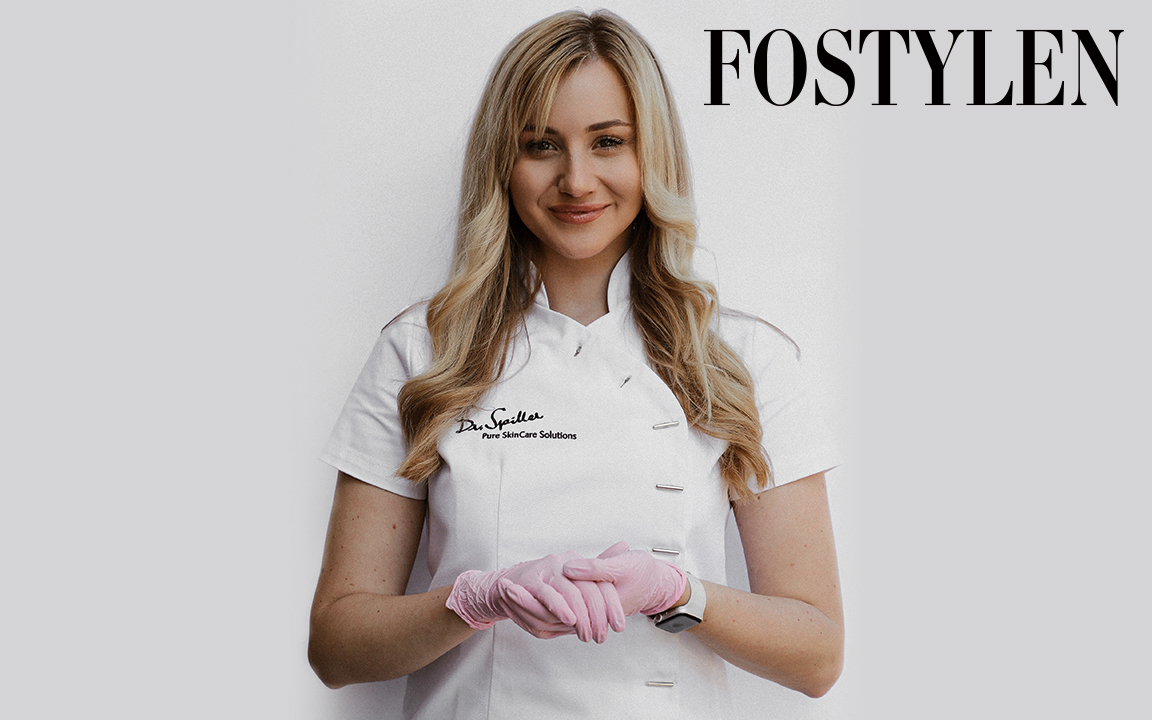
Kateryna Yakymovych — an Aesthetic Skin Expert, the creator of her own method of systemic skin restoration, an Official Judge in the USA, an educator, and a mentor. She works at the intersection of aesthetic medicine, skin physiology, and the psychology of self-perception. She is the founder of the aesthetic space Beauty Aesthetic Room and the author of a professional online course for industry specialists.
You often say that aesthetics is transformation. What is the difference between changing one’s appearance and changing self-perception?
Changing appearance is a mechanical process.
Changing perception is a neuropsychological restructuring.
You can correct the shape of the lips or improve skin texture, but if a woman still has an internal conflict with herself, she will continue searching for new “flaws.”
Transformation happens when the result does not create dependency but instead builds stability and consistency.
How does skin condition affect self-esteem?
Skin condition is directly connected to self-esteem.
Acne, hypersensitivity, and chronic inflammation are not only physiological issues; they are often linked to social anxiety. When we restore skin health and improve its appearance, a woman begins to feel safe.
And the feeling of safety is the foundation of confidence.
What does the “science of self-acceptance” mean in your approach?
For me, the science of self-acceptance is about forming a realistic and stable self-image. I do not work with ideals. I work with the biological potential of the tissue, its resources, and its capacity for regeneration. When a client understands the limits and possibilities of her own physiology, the illusion of “endless improvement” disappears.
Self-acceptance begins with honesty:
— what we can improve;
— what we can stabilize;
— and what does not require correction at all.
In my approach, it is important not to create a new dependency on procedures, but to build a state in which a person stops searching for problems within herself. The “science of self-acceptance” is a balance between the ability to change and respect for natural structure. It is about working on yourself, not fighting yourself.
Why is strategy in aesthetics more important than a one-time procedure?
A single procedure creates an effect.
Strategy creates a result.
A systemic approach:
• minimizes complications;
• reduces sensitization;
• builds tissue tolerance;
• delivers a predictable long-term outcome.
Without strategy, there is no stability.
How do you shift a client’s request from “fixing flaws” to self-care?
I change the wording of the request itself.
Instead of asking: “What don’t you like about yourself?”
I ask: “What skin condition gives you a sense of confidence?”
This shifts the focus from struggle to care. And it truly changes self-perception.
How does physiological stability influence a woman’s psychological state?
When the skin is stable, a woman stops living in a constant state of anticipating flare-ups. She is no longer afraid of the mirror. She does not hide behind makeup. She does not depend on filters.
Physiological stability creates psychological stability.
Does the attitude toward appearance differ across countries?
Yes, there are differences. In Ukraine, perfectionism is often present. In Europe, there is a strong focus on natural beauty. In the United States, there is a culture of self-branding. But across all countries, there is something in common: women are not searching for perfection; they are searching for confidence.
Regardless of the country, 90% of my clients are Ukrainian. I feel especially comfortable working with our people because we share a deep understanding of the process and a strong sense of responsibility for results.
How do you address the influence of social media and unrealistic beauty standards?
I always explain the difference between real-life skin texture and filtered images. Education is the key. When a client understands skin physiology, she stops comparing herself to a pixel.
Should an aesthetic professional carry psychological responsibility?
Absolutely. An aesthetic practitioner works not only with tissue but with the sense of self. Every injection, recommendation, or comment can either strengthen a woman’s self-worth or deepen her inner criticism.
Psychological responsibility means knowing when to stop, refusing excessive correction, explaining boundaries, and preserving a client’s individuality. Ethics in aesthetics is more important than technique.
What principle lies at the core of healthy self-acceptance?
Stability is more important than perfection.
Self-acceptance is about creating a state in which a person feels comfortable being herself.